
A Comprehensive Guide to Photographing Desert Camps
If there's one area of hotel photography I find myself drawn to most, it's desert camps. Probably because they're the most challenging. Everything you rely on in a traditional hotel shoot — controlled environments, consistent lighting, easy access to power and facilities — doesn't exist out here. What you get instead is harsh sun, extreme temperatures, sand in places you didn't know sand could reach, and some of the most visually extraordinary settings a photographer could ask for.
I've photographed luxury desert camps across Oman and the wider Middle East, and every one of them has taught me something different. The work is physically demanding, logistically complex, and creatively rewarding in a way that no city hotel can replicate. The images that come out of these shoots tend to be the ones that stop people mid-scroll — because the environment itself is so dramatic that when you get it right, the results are genuinely arresting.
This is what I've learned about how to do it well.
Understanding what you're walking into
The desert is not a studio. It's an environment that actively works against you in ways that no hotel ever will. The light is brutal — high midday sun creates deep shadows and washed-out highlights that ruin most shots. Temperatures can swing from formidable heat at noon to near-freezing at night. Sand gets into equipment, wind shifts the landscape between shots, and there's usually no power source within sight.
None of this is a reason to avoid desert camp work. All of it is a reason to prepare differently. A photographer who's only shot urban hotels will struggle in this environment — not because they lack skill, but because the desert demands a specific set of adaptations that only come from experience.
When you're evaluating a photographer for your desert camp, the first thing to look at isn't their general portfolio. It's whether they've worked in this kind of environment before. The challenges are real, and they affect every aspect of the production.



The light changes everything — and it waits for no one
In desert photography, timing isn't just important. It's the single variable that separates a flat, forgettable image from one that makes someone feel the heat on their skin.
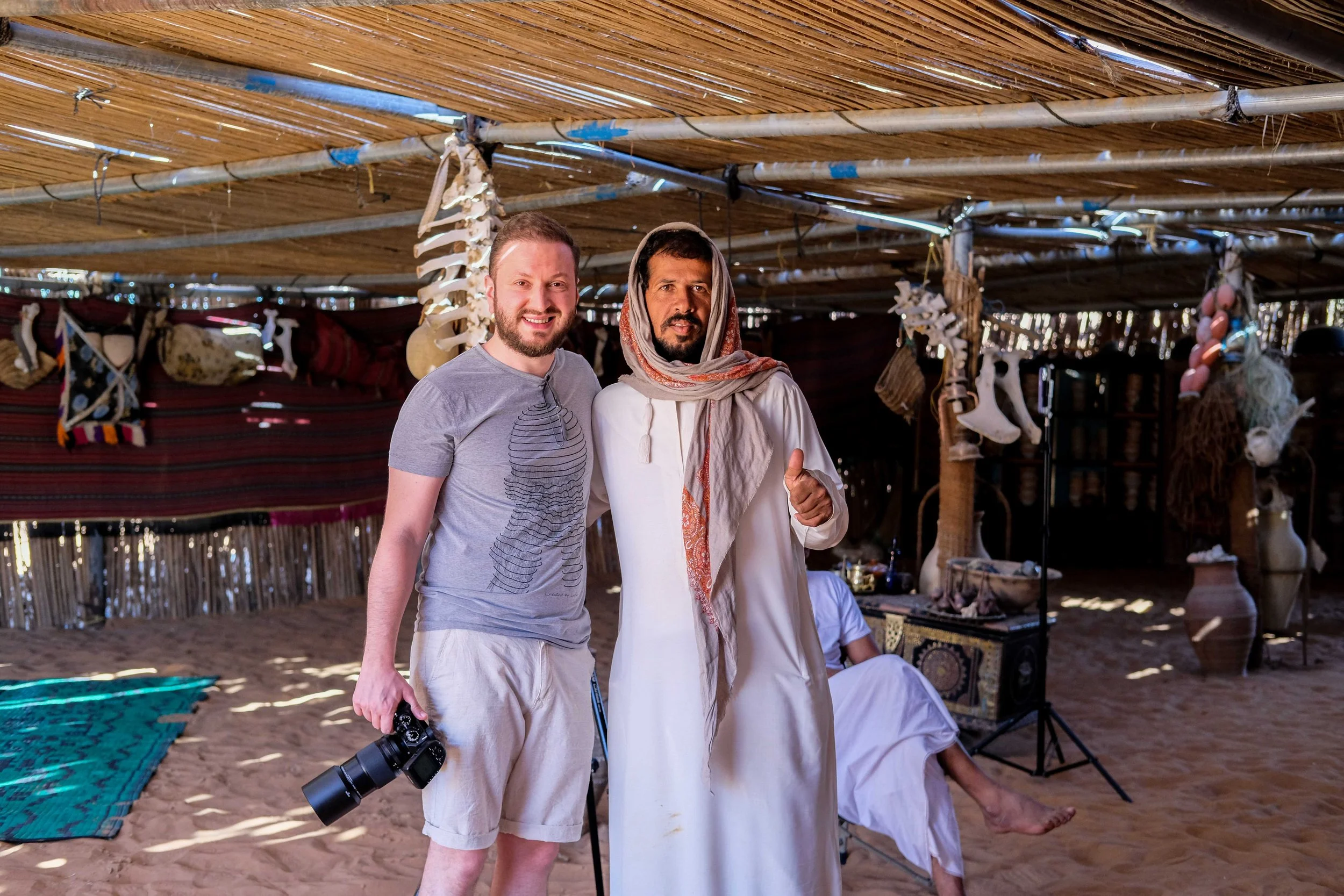
Golden hour — that window shortly after sunrise and just before sunset — is where the magic happens. The low angle of the sun paints the dunes in warm, sculpted light, creates long dramatic shadows that reveal the texture of the sand, and bathes the camp in a glow that no artificial light can replicate. This is when you shoot exteriors, landscapes, and anything that needs to feel warm and atmospheric.
Blue hour — the twenty minutes just before sunrise and after sunset — offers something completely different. A cool, serene stillness where the sky deepens and the camp's lanterns and tent lights glow against the fading landscape. It's the most beautiful window for twilight shots of tent exteriors and camp overviews, and it lasts maybe fifteen to twenty minutes. If you're not set up and ready when it arrives, it's gone.
This means desert camp shoots follow a very different rhythm than hotel shoots. You're up before dawn, shooting through golden hour, pausing in the heat of the day for interior work and planning, then shooting again from late afternoon through sunset and into twilight. It's a compressed, intense schedule that requires careful planning and a photographer who understands how to work within those windows.

The experiences matter more than the architecture
This is the biggest difference between photographing a desert camp and photographing a hotel. In a hotel, the physical space — rooms, lobby, pool, restaurant — carries a large portion of the visual story. In a desert camp, the tents are often modest by design. The physical structures are not the selling point. The experience is.
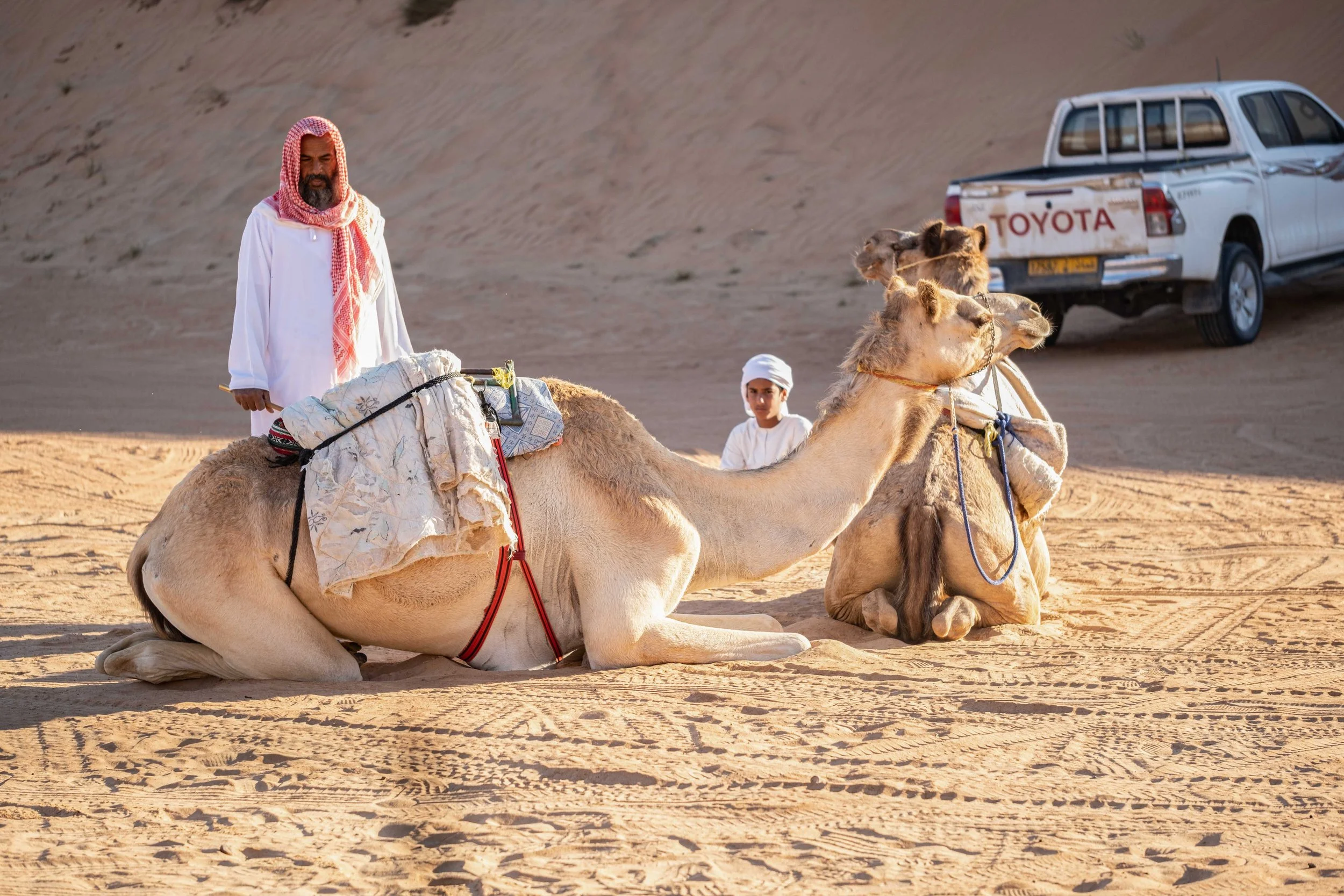
Camel treks through dunes at sunrise. Sandboarding at golden hour. ATV rides across open desert. Henna applied by bedouin women. Handmade bracelets in a traditional tent. A campfire under a sky with more stars than most guests have ever seen. These are the moments that sell a desert camp — and they require a photographer who understands lifestyle and experience photography, not just architectural coverage.
When I photograph a desert camp, I typically spend more time on experiences than on the tents themselves. The physical spaces get their architectural coverage — that's essential for websites and OTAs. But the images that actually drive bookings, that get shared on social media, that make someone stop scrolling and say "I need to go there" — those are always the experience shots.
For marketing teams: when briefing a photographer for a desert camp, make sure the scope prioritises guest experiences and cultural activities — not just tent interiors. The experience images are the ones that will differentiate your property from every other camp in the market.


Using the landscape to create scale and drama
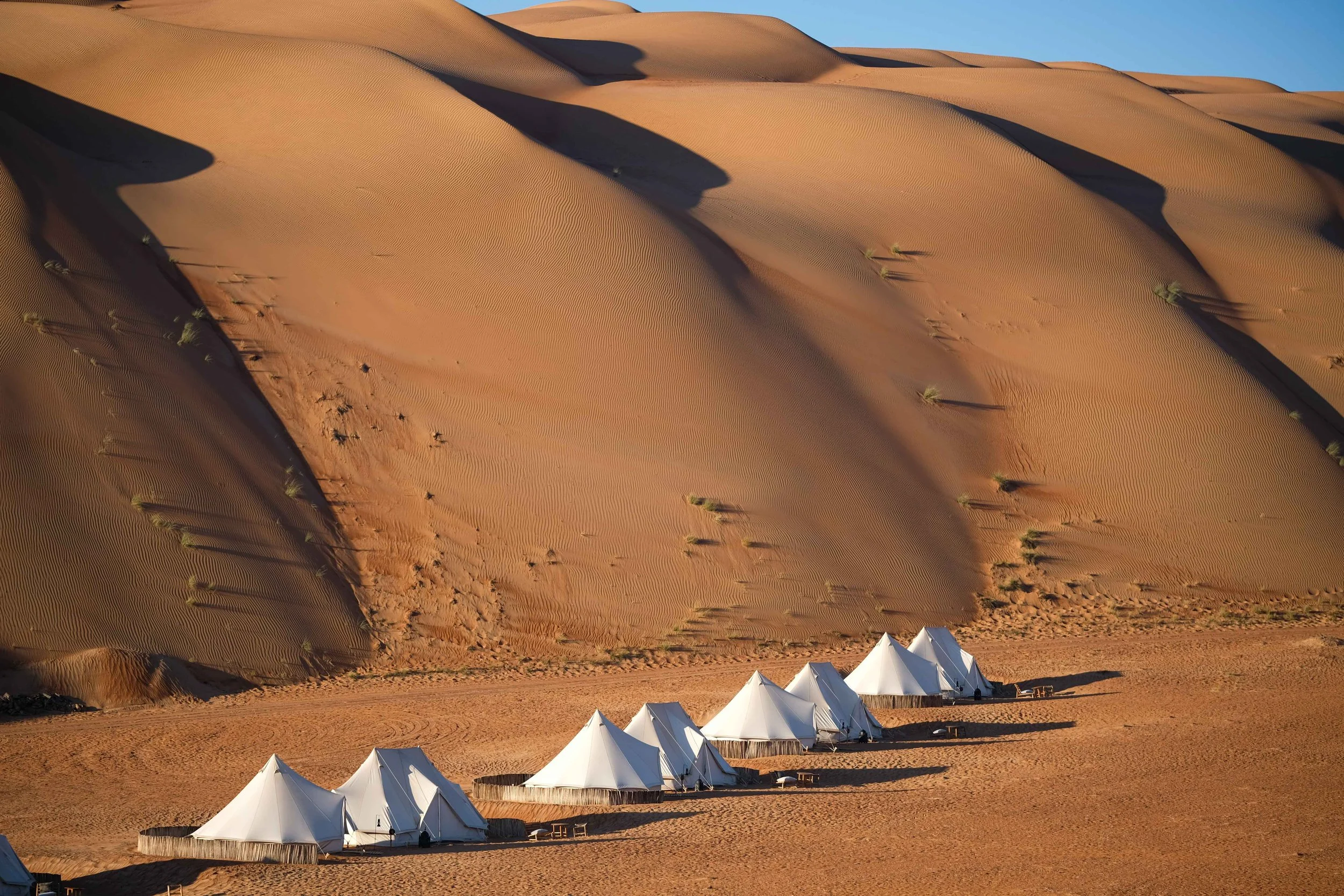
One of the most powerful aspects of desert camp photography is the contrast between the intimate scale of the camp and the vast, open landscape around it. Tiny tents against enormous dunes. A single figure walking across an endless expanse of sand. A campfire glowing against a darkening sky that stretches to the horizon in every direction.
Creating that sense of scale requires positioning — getting above the camp to show it in context, or pulling far enough back that the dunes dwarf the structures. These aren't shots you can take from inside the camp. They require scouting, climbing, and sometimes driving to a vantage point that reveals the full drama of the setting.
The desert landscape itself is a character in these images. The patterns of the sand, the way dunes curve and layer against each other, the colour shifts from orange to gold to deep red depending on the light — all of this becomes part of the visual story. A photographer who understands this will use the landscape actively, not just as a backdrop but as a compositional element that elevates every frame.
Showing what makes each camp unique
Every luxury desert camp has features that set it apart — whether that's a private pool villa nestled between dunes, an open-air dining setup under the stars, a rooftop observation deck, or a particular approach to design that blends modern comfort with traditional materials.
These unique features need to be photographed with the same intentionality as a hotel's signature suite. They're the visual differentiators that separate one camp from another in a market where, at a glance, many desert camps can look similar. The photographer needs to identify what's distinctive about each property and make sure those elements are captured in a way that communicates their value — not just their existence.

Culture is the story most camps fail to tell visually
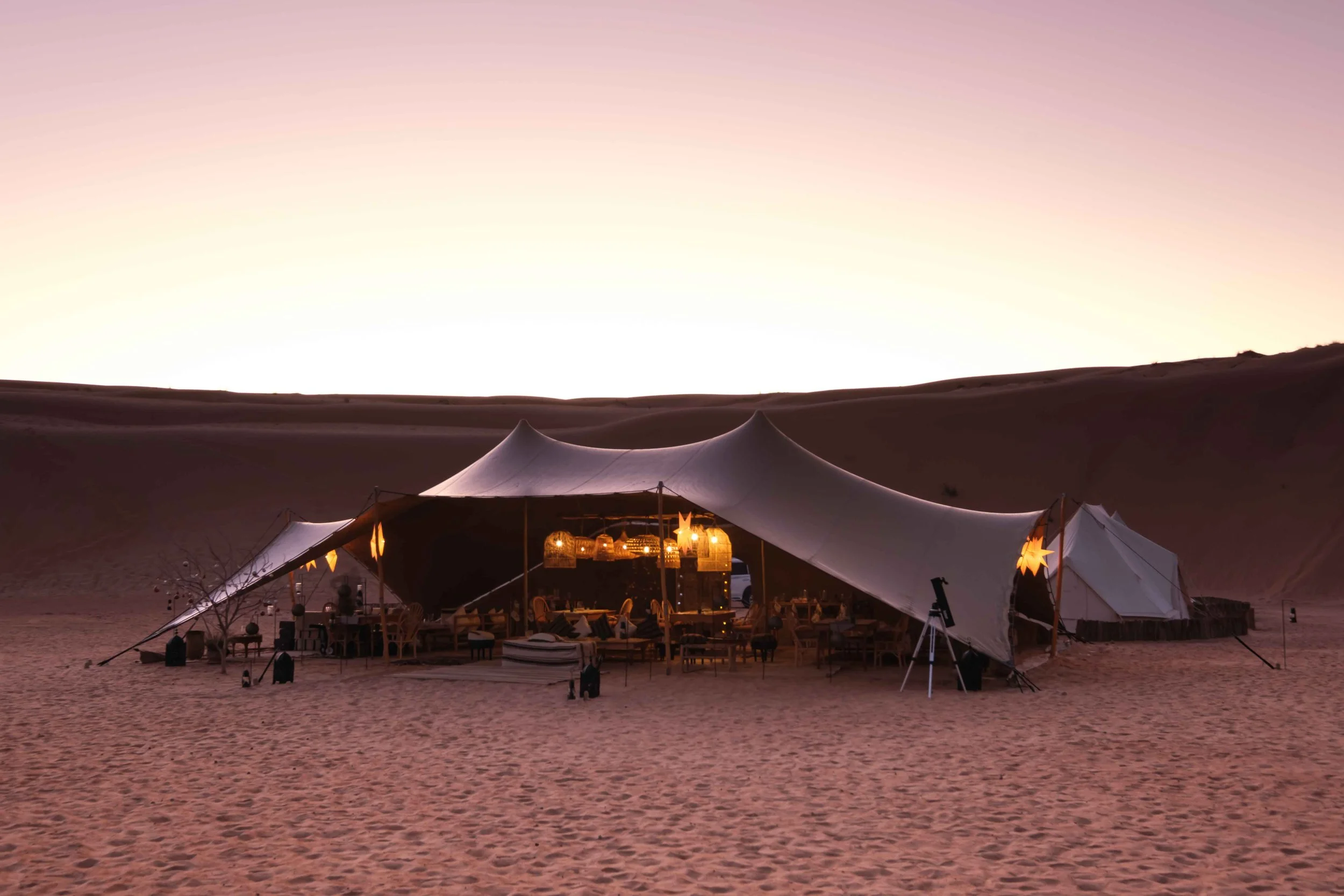
Luxury desert camps almost always draw from the culture of the region — traditional architecture, local textiles, bedouin hospitality, food prepared in ways that haven't changed in generations. These cultural elements are often the most emotionally resonant parts of the guest experience. And they're the ones that most camp photography completely undersells.
Photographing culture requires time, sensitivity, and trust. You can't rush a portrait of a bedouin elder. You can't stage a traditional meal and expect it to look authentic if you haven't spent time understanding how that meal is actually prepared and served. The best cultural photography comes from immersion — being present long enough that people relax, moments happen naturally, and the camera captures something real rather than something performed.
From a commercial perspective, cultural imagery is some of the most powerful content a desert camp can have. It's the content that tells a story no competitor can copy — because it's rooted in a specific place, a specific community, and a specific set of traditions. Architectural shots of tents can look similar across camps. Cultural stories are always unique.
Every image should tell a story
A luxury desert camp is selling more than a place to sleep. It's selling a feeling — of adventure, of disconnection, of something vast and ancient that most people's daily lives don't have access to. The photography needs to carry that feeling.
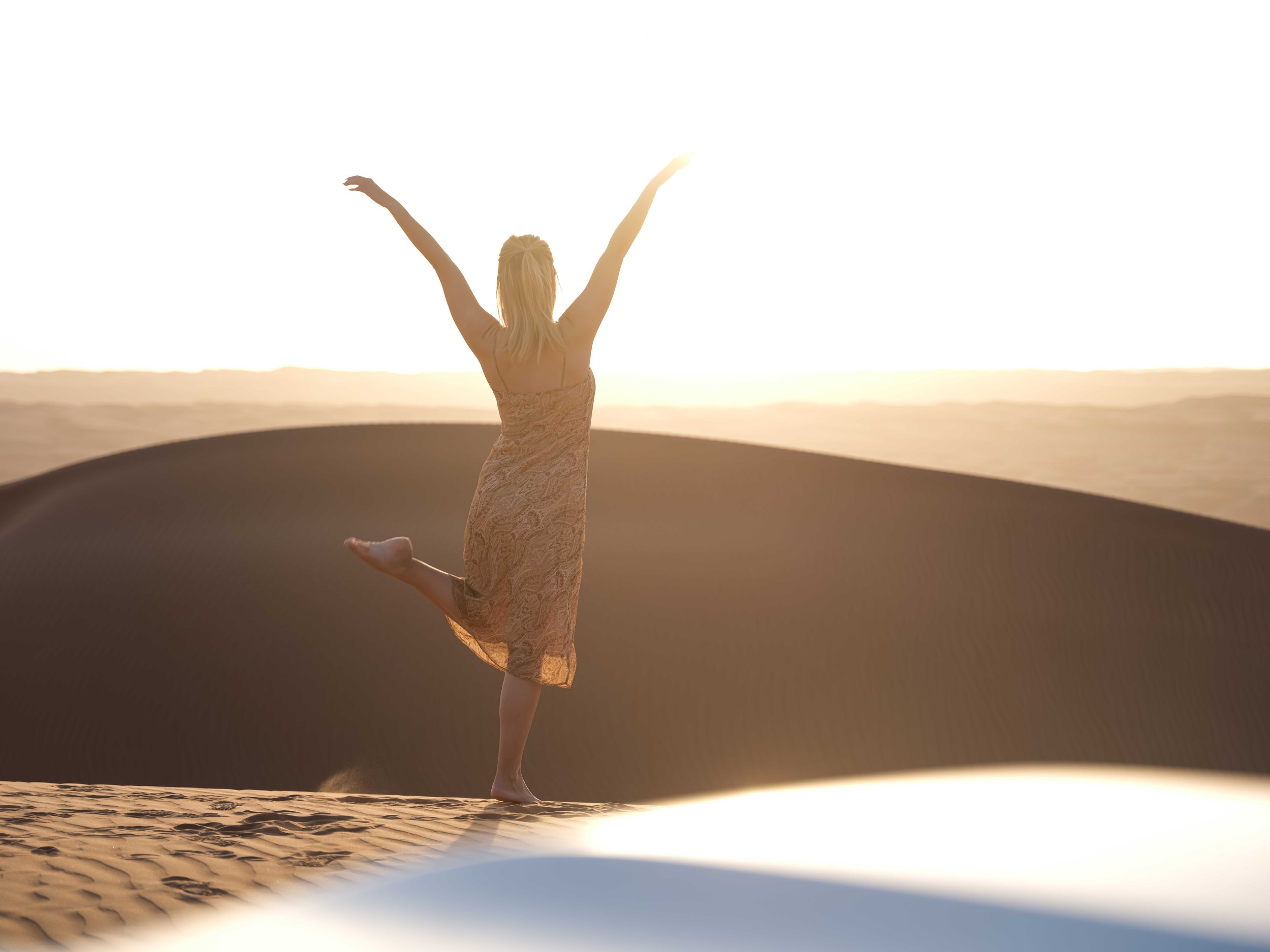
This means going beyond documentation. It means capturing the moments between the obvious ones — a guest watching the sunrise alone, coffee in hand on a terrace overlooking the dunes. Two women laughing in the back of a Land Cruiser after a dune bashing run. A child reaching toward a camel's face. The quiet glow of a lantern being carried across the sand at dusk.
These are the images that create emotional connection. They're the ones that make a viewer not just see the camp, but want to be there. And they don't happen by accident — they happen because the photographer was present, patient, and looking for moments rather than just compositions.


What to look for when choosing a photographer
If you're a marketing team preparing to commission photography for a desert camp, the evaluation process should be different from hiring someone for a city hotel. Here's what I'd prioritise, based on years of doing this work and years of commissioning it before that.
First, look at their desert-specific work. Not just "outdoor photography" — actual desert camp or remote hospitality experience. The challenges are specific enough that general hotel photography experience alone isn't sufficient.
Second, look for range in their portfolio. Can they deliver architectural interiors and lifestyle storytelling? Desert camps need both, and many photographers are strong at one but not the other. You need someone who can shoot a tent interior with the same care they bring to a sunrise camel trek.
Third, look at their light. The most telling indicator of a desert photographer's skill is how they handle the extremes — the golden warmth of low sun, the cool serenity of blue hour, and everything in between. If their portfolio only shows midday shots with flat, even lighting, they haven't spent enough time in this environment.
Finally, look for emotional depth. The strongest desert camp photography doesn't just show you a place. It makes you feel the silence, the heat, the scale, the intimacy of a campfire under an infinite sky. That emotional quality is what separates competent work from work that actually drives bookings.