

Photographing the World's one of the Most Exclusive Desert Camp - Magic Camp in Oman - Wahiba Sands
Three hours from Muscat to Bidiyah melted away. At the edge of the desert, we were greeted by the only vehicle that makes sense out here: the formidable Land Cruiser. That's the only way to reach Magic Camp — it sits deep inside the Wahiba Sands, well beyond the point where paved roads give up.
Another thirty minutes of dune driving, camels drifting across the horizon, bedouin tents scattered in the distance, and then the camp appeared. Ten pairs of tents — each one a bedroom and a bathroom — laid out elegantly against the sand. Small. Deliberate. Quiet.

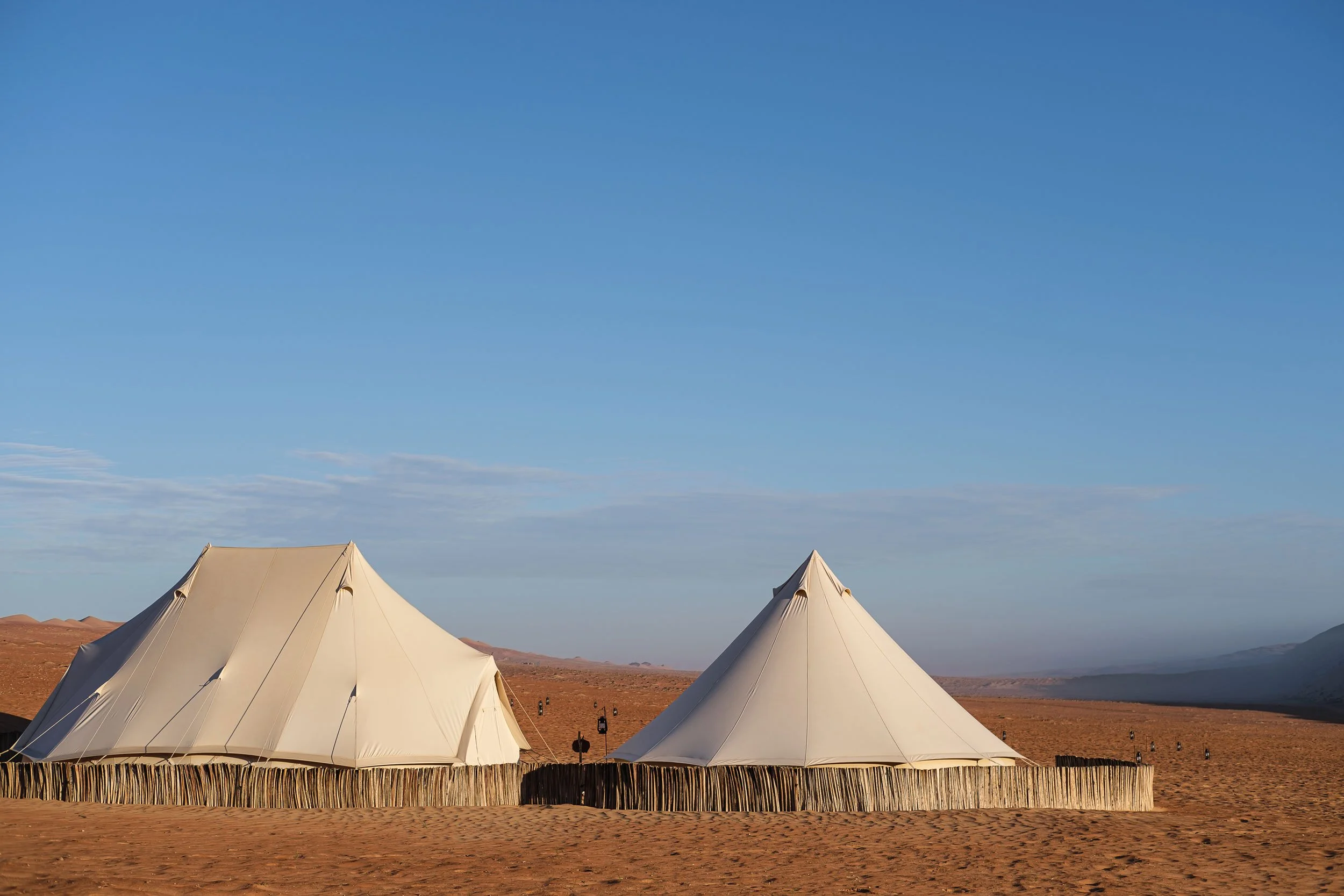
Some places look special in photos but feel ordinary when you arrive. Magic Camp is the opposite. Nothing I'd read or seen beforehand prepared me for how it actually felt to stand there.
Understanding the place before picking up the camera
I spent the first couple of hours just being there. No camera. Walking the camp, talking to the staff, absorbing how the place works. And what I realised was that this camp is built entirely around sustainability and authenticity. You stay here with the same simplicity that bedouin people live with in their tents — but in a purposefully designed, carefully elevated way that doesn't interfere with that plainness. It enhances it.
That changed my entire approach to the shoot. The brief wasn't going to be about photographing architecture or interiors — the tents are small and intentionally modest. The brief was about conveying a feeling: exclusivity, remoteness, and a kind of luxury that has nothing to do with thread counts.

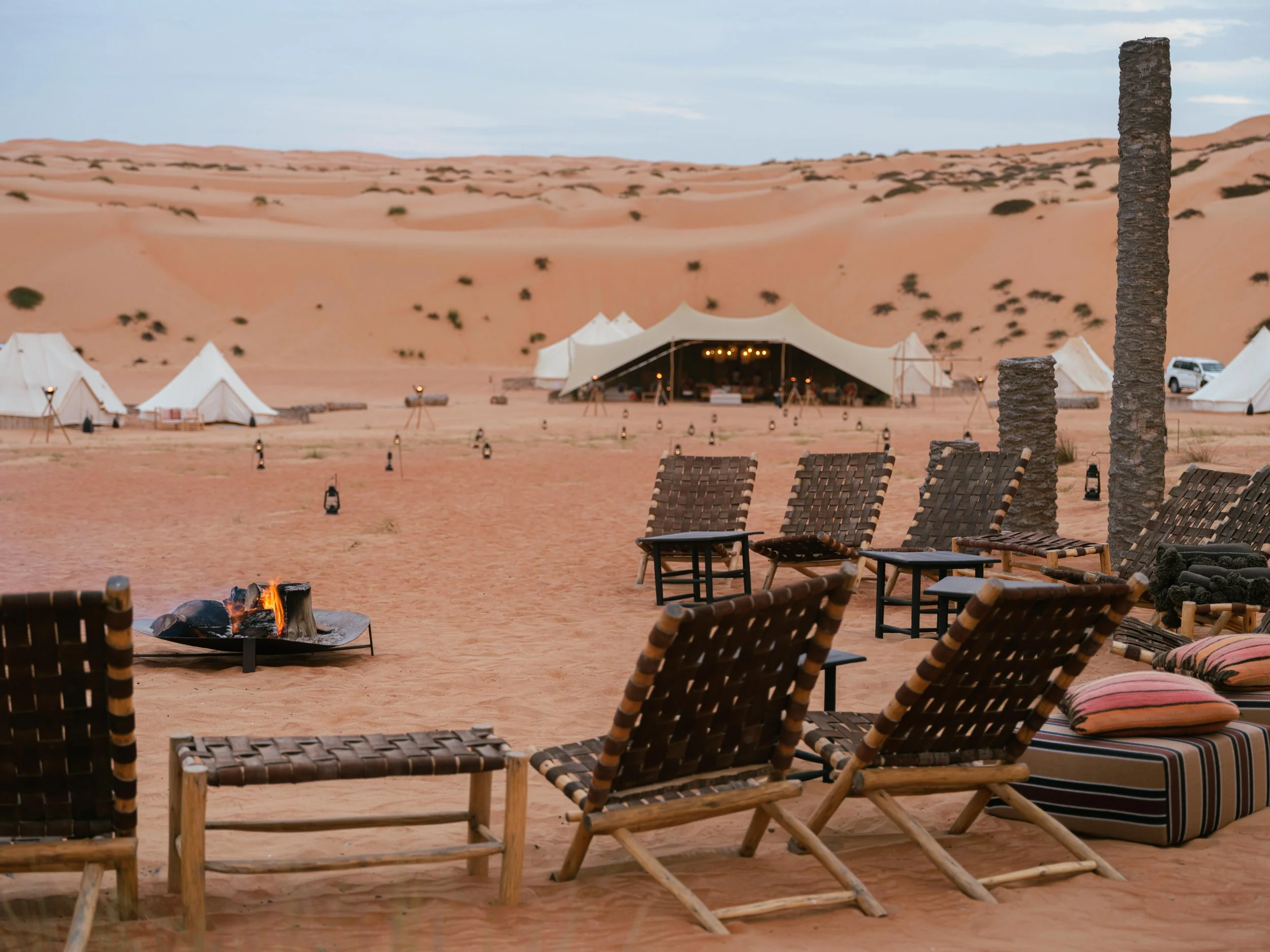


What makes Magic Camp different
You can't book this camp on Booking.com or Expedia. You can't Google it and hit a reservation button. It's only accessible through a select group of travel agents as part of a curated Oman itinerary. That alone tells you something about the kind of guest this place attracts — and the kind of visual story it needs.
Here's another detail that shaped my approach: there's no cell phone coverage in the entire camp. None. The camp manager communicates with the base in Bidiyah through a satellite phone. And the most surprising part? Guests are completely fine with it. They come here specifically to be disconnected. That was a big signal for me. The words that came to mind were tranquillity, remoteness, unplugging. Those became the emotional framework for the shoot.


Eighty-two percent of Oman's total land area is desert, and desert camps are a common experience here. But Magic Camp is different from all of them. When the camp closes during summer, you'd never know anything was there. It leaves no trace. That commitment to the landscape — to being temporary and respectful — is core to what makes this place what it is.
Focusing the lens on experience, not architecture
I knew early on that I'd spend minimal time photographing the tents themselves. They're modest by design — and that's the point. The real story of Magic Camp lives in the experiences around it: the camel treks guided by bedouin who know every dune by memory, the sandboarding, the campfire evenings, the food, the people.
One thing I always do on these shoots is talk to whoever runs the operation. I asked the camp manager how guests spend their time, what they enjoy most, what feedback they give, where they come from. That conversation shaped the shot list more than any walk-through of the property could.
The approach: as much as I enjoy shooting architecture, this project was about experience photography — capturing what it feels like to be here, not what the place looks like. The physical elements of the camp make up a small portion of what makes Magic Camp what it really is. The rest is feeling.
I wanted to convey what it's like to stand in the middle of complete emptiness. Pure silence, then the faint sound of desert wind carrying sand grains that brush against your ears. The formidable heat at noon. The freezing cold at night. Stars like you've never seen. How do you possibly show this in photos? You take the time to feel it yourself first. Then you shoot.


The bedouin village — the most genuine thing I've photographed
The most fascinating part of this project was the time we spent in a bedouin tent. It's part of the regular itinerary for anyone visiting the camp — a visit to a nearby bedouin village.
Coming from twenty years in hospitality and having stayed in more hotels than I can count, I can spot a touristic, pretentious "local experience" show the moment I walk in. This wasn't one. This was 100% genuine. We visited bedouin people in their original environment, ate their food, talked with them, and witnessed a life that's simple yet perfectly sufficient.
One observation I can't shake: I have never seen kids that happy anywhere else in the world. No tablets. No smartphones. No fancy toys. Just playing with each other — simple, old-fashioned play — and they never stopped laughing the entire time we were there. That moment stayed with me long after the shoot was over.
I shot some of my favourite images from the entire project in that village. Bedouin women applying henna, making handmade bracelets for visitors, the camel rides guided by people who've lived in this desert their entire lives. But more than the photos, I came back with memories that photographs can only hint at.


After dark
As the day turned into night, Magic Camp revealed another layer. With virtually zero light pollution this deep in the desert, the sky opens up in a way that genuinely stops you. The camp provides telescopes, but you don't need them — the Milky Way is right there, impossibly vivid, in a silence so complete you can hear the sand shifting.
That silence was one of the most powerful things about this entire experience. The stillness of the desert at night, the whisper of wind, the soft rustle of sand — it puts you somewhere that the modern world doesn't have easy access to. And that's exactly what Magic Camp is selling, even if they'd never use that word.


What I took away
Oman is already an extraordinary country — natural beauty, untouched rural areas, modern infrastructure without the hassle of big crowds and busy roads. Magic Camp sits just three hours from the capital, deep inside Wahiba Sands, and it's the kind of experience that stays with you.
As a photographer, this project reinforced something I believe strongly: the most powerful hotel and hospitality images don't come from showing the physical space. They come from understanding the experience that space creates — and finding ways to put the viewer inside that feeling. At Magic Camp, the feeling is disconnection, silence, and a kind of simplicity that most luxury travellers have never experienced.
Capturing that wasn't about the right lens or the right angle. It was about spending the time to understand what made this place extraordinary — and then letting the images carry that understanding forward.