

How to Prepare Your Hotel for a Professional Photo Shoot
I've been on both sides of this. As a hotel director, I've witnessed many photoshoots and how different quality of photography impact conversion, sales and success of a hotel esepcially in online platforms. As a photographer, I've arrived at hotels that were flawlessly prepared and others where nobody told housekeeping the shoot was happening. The difference in output between the two isn't subtle. It's the difference between images you use for five years and images you start replacing within six months.
This guide is what I wish every hotel marketing director and GM had before their next shoot. It's practical, it's specific, and it's based on patterns I've seen repeated across dozens of properties. Most of the mistakes that undermine a hotel photo shoot aren't creative — they're logistical. And nearly all of them are preventable.
Weeks before the shoot
The strategic work happens here — and this is the phase most hotels skip entirely, jumping straight to logistics.
Define the scope, not just the shot list
Before anything else, sit down and answer the fundamental question: how will these images be used? Website and OTAs? Brand campaigns? Social media? Print collateral? All of the above? The answer determines everything — how many images you need per space, whether you need lifestyle talent, whether you need multiple times of day, and how many production days the project actually requires. A shot list without this context is just a checklist. A scope built on usage intent is a strategy.
Have the brand conversation with your photographer
Before discussing logistics, equipment, or schedules — talk about your hotel. What experience do you promise? Who is your guest? What sets your property apart from competitors? What's the emotional territory you own? A good photographer will shape their entire approach around these answers. If your photographer doesn't ask these questions, that tells you something about how they work — and it's not what you want.
Walk the property with fresh eyes and a maintenance list
Walk every space that will be photographed — not as someone who sees it daily, but as a camera would. Check for blown light bulbs, chipped paint, scuffed walls, stained ceiling tiles, damaged furniture, loose fixtures. The camera amplifies every flaw. A scratch you've walked past for months becomes a permanent distraction in a photograph. Give your engineering team a prioritised punch list with enough lead time to actually address the issues.
Coordinate across departments
A photo shoot touches every department. Housekeeping needs to know which rooms to prepare and when. Front office needs to block those rooms from inventory. F&B needs to coordinate food styling and table setups around service times. Engineering needs to ensure everything is working. The spa needs to be available. And management needs to understand that the photographer may need to briefly control access to public areas. Send a detailed schedule to every department head at least two weeks before the shoot. The number one logistical problem I encounter is departments that didn't know the shoot was happening.
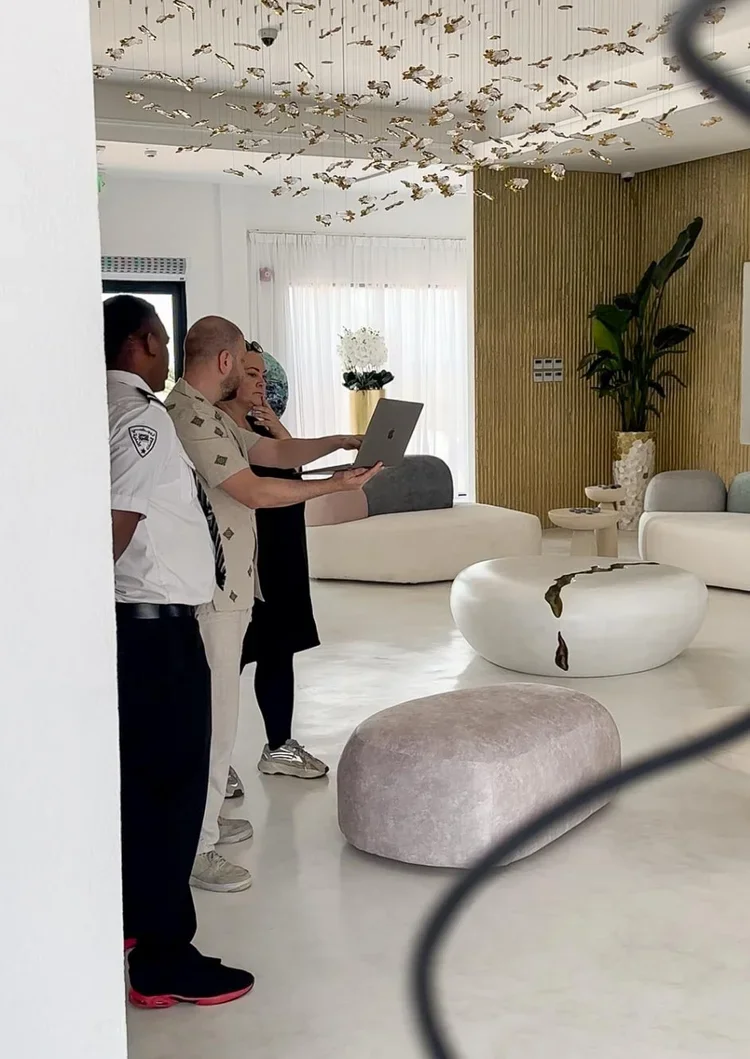
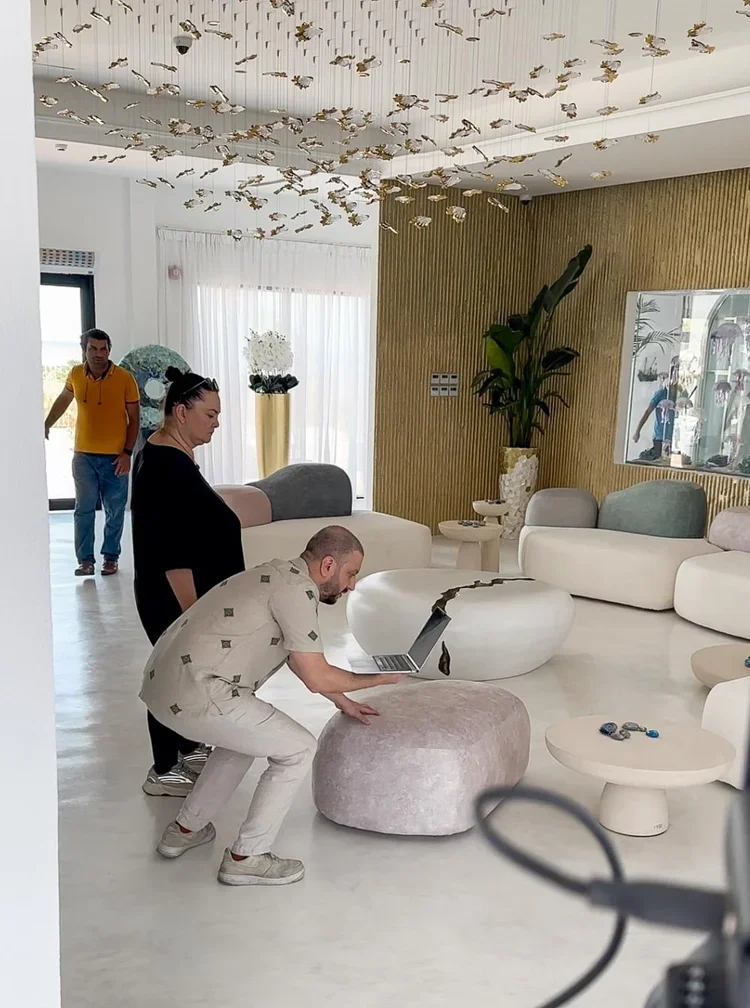
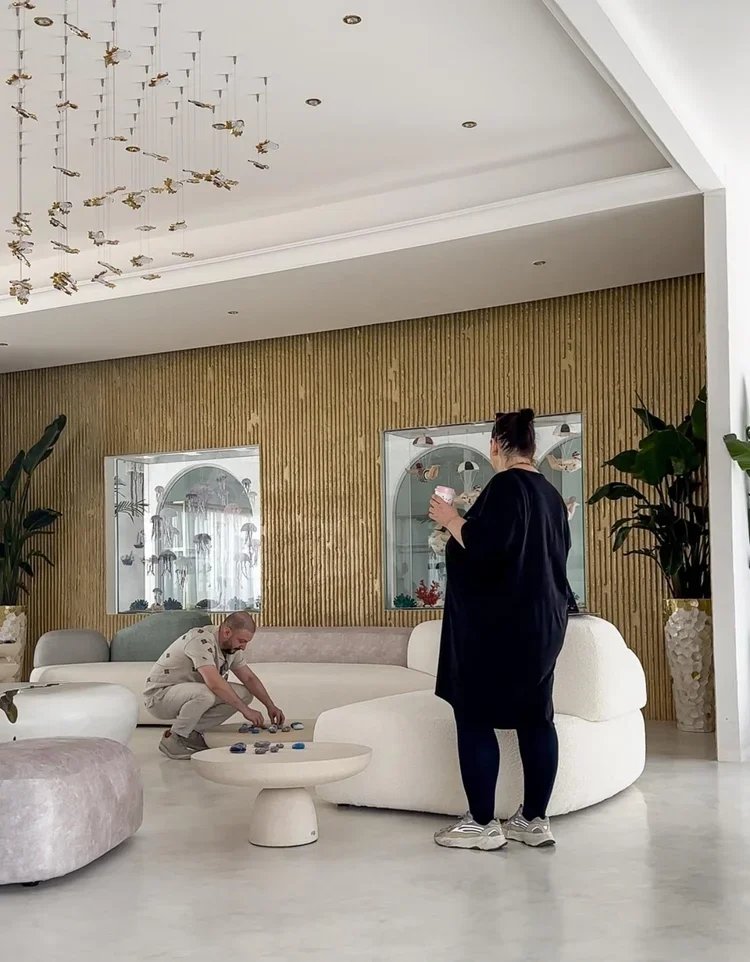
Behind-the-scenes from the Ramlah Resort shoot. Even small details like the alignment of decorative stones on a coffee table matter — not because they'll be prominently visible in the final frame, but because misaligned details become subconscious distractions. On this project, the interior design team was on site, which gave us the opportunity to collaborate on furniture placement without compromising the design intent. The result is below.
Final image of Ramlah Resort Lobby with carefully staging of every piece of item on the frame
The day before
This is when preparation becomes execution. Everything that follows needs to be done before the photographer arrives — not alongside them.
Rooms: prepare every room that will be photographed to an immaculate standard. Fresh linens, perfectly pressed, wrinkle-free. Beds made to the tightest specification your housekeeping team can deliver. Every surface cleaned — not guest-room clean, photo-shoot clean. That means no dust on headboards, no fingerprints on glass, no water spots on fixtures. Remove all clutter: guest directories, remote controls, phone chargers, promotional materials, anything that isn't part of the deliberate visual story.
Bathrooms: these are where hotels most often underperform in photography. Polish every surface. Clean grout lines. Remove soap residue. Ensure all amenities are perfectly aligned and the correct way round. Check that towels are bright white — not the ones that have been through 200 wash cycles and turned grey. Hang them with precision. A carelessly folded towel is invisible to the eye and glaring in a photograph.
Public areas: the lobby, the restaurant, the pool, the spa — walk each one and remove anything that doesn't serve the image. Guest information signs, temporary displays, wet floor signs, stanchions, newspaper stands, bin liners visible above bin edges. Clear exterior areas of vehicles, delivery trucks, garbage bins, and construction materials. If there's landscaping that looks tired, address it now.
Props and styling: this is where thoughtfulness separates good preparation from great. Select items that feel natural to each space and consistent with your brand. A book left casually open on a side table. A coffee cup placed just so on a terrace. Fresh flowers that match the room's colour palette. These small touches create the feeling of a space that's lived in and welcoming — not a showroom that nobody has touched. Discuss prop choices with your photographer in advance if possible — they'll have opinions on what works and what doesn't.
F&B preparation: if the shoot includes restaurants or bars, coordinate food styling with your chef well in advance. Decide which dishes will be photographed, have all ingredients available, and allow time for plating. Great food photography can't be rushed — a beautifully plated dish that sits under studio lights for twenty minutes looks very different from a freshly finished one. Time the food styling around the photographer's schedule, not the other way around.
The morning of the shoot
Before the photographer arrives, do a final walk-through of every space on that day's schedule. Check everything. Then check it again. Look at the rooms from the doorway — that's roughly where the camera will be positioned first. Does anything catch your eye that shouldn't be there?
Ensure all lights are working — every single one. A blown bulb in a bathroom sconce or a bedside lamp that doesn't turn on can mean a room that was supposed to take forty-five minutes now takes ninety while the team waits for engineering. This is preventable.
If the schedule includes exterior shots in early morning or late afternoon, confirm that landscaping teams have finished their work and that parking areas and entrances are clear. Nothing ruins a carefully composed twilight exterior shot faster than a delivery van appearing in the background at the last moment.
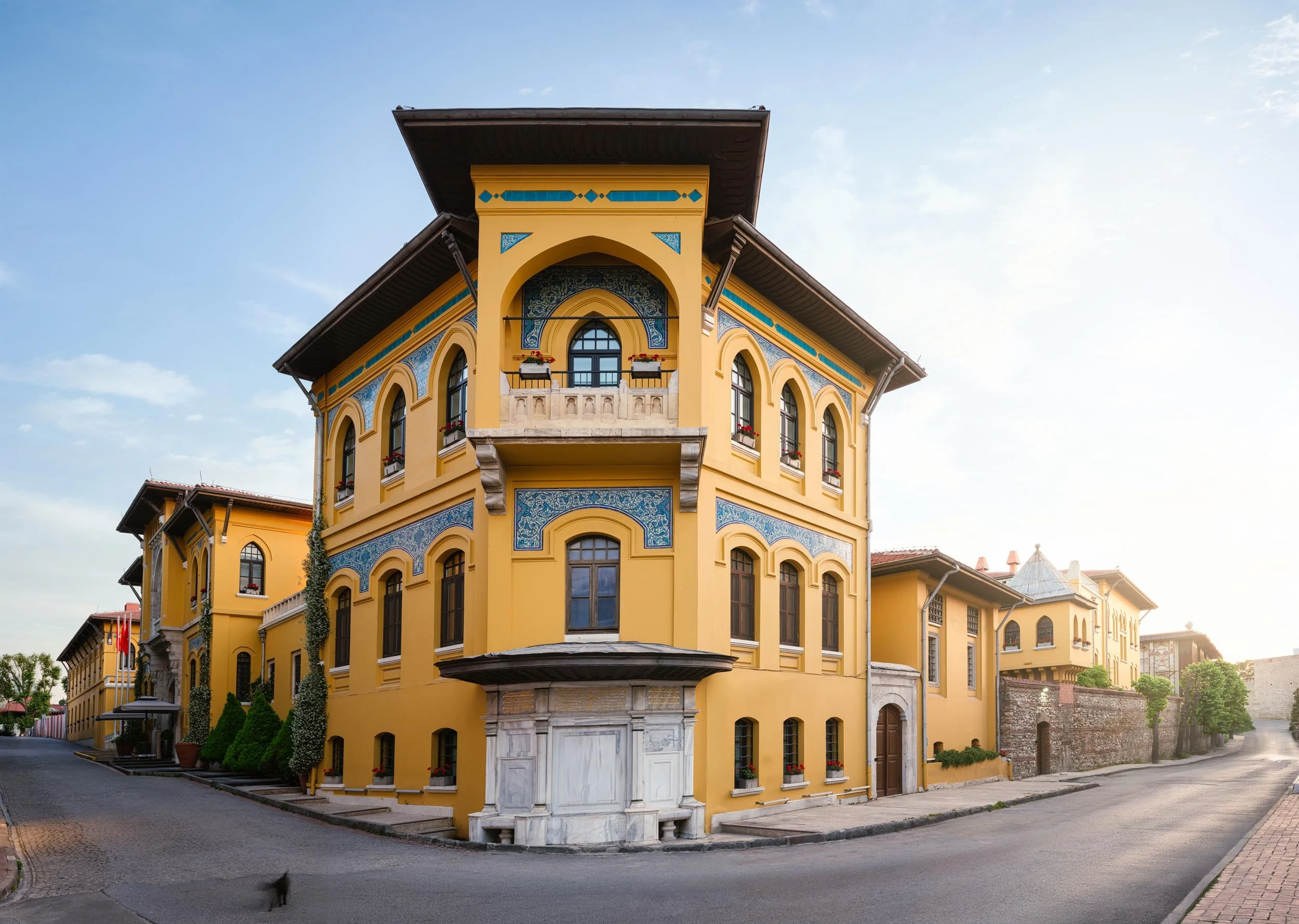
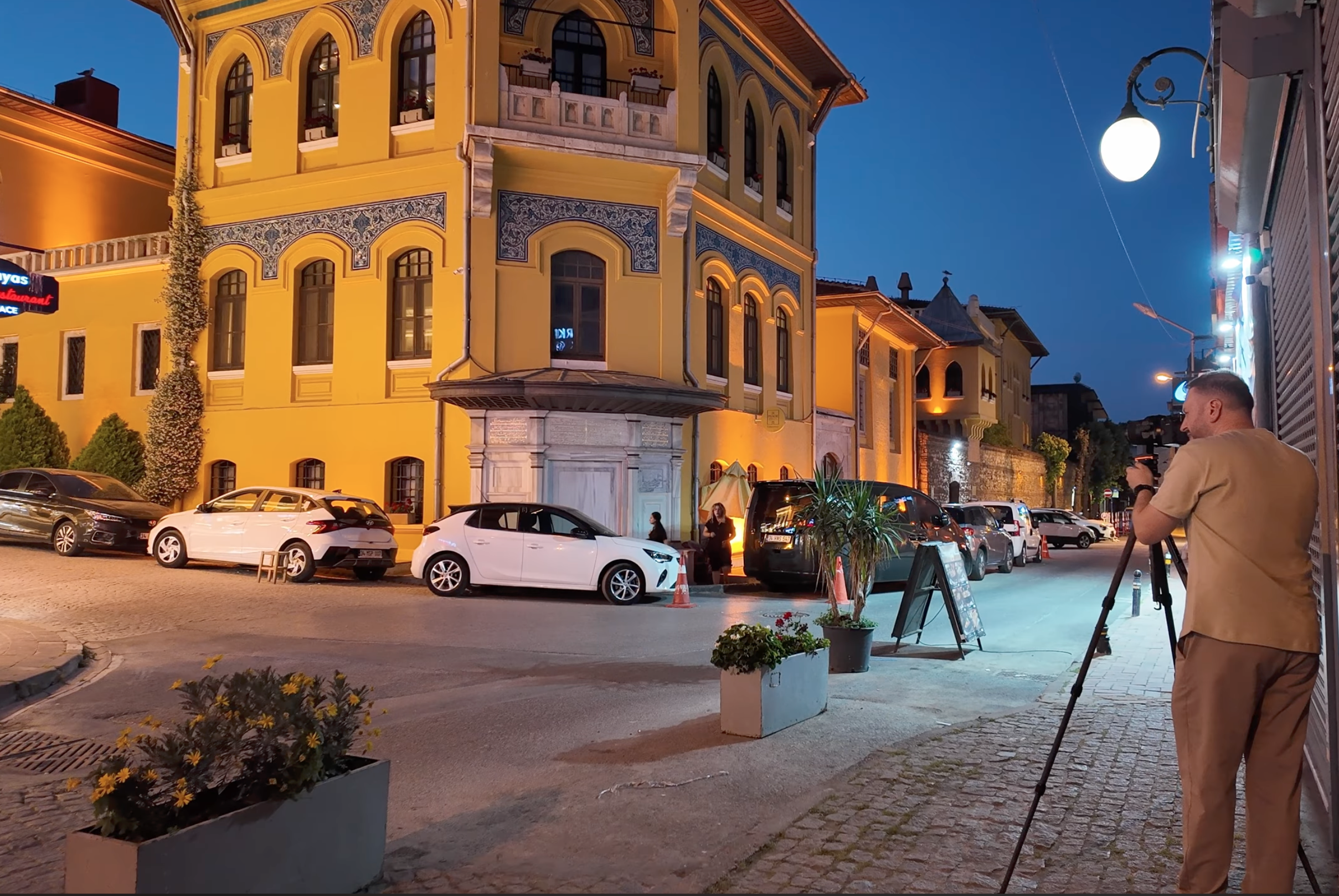
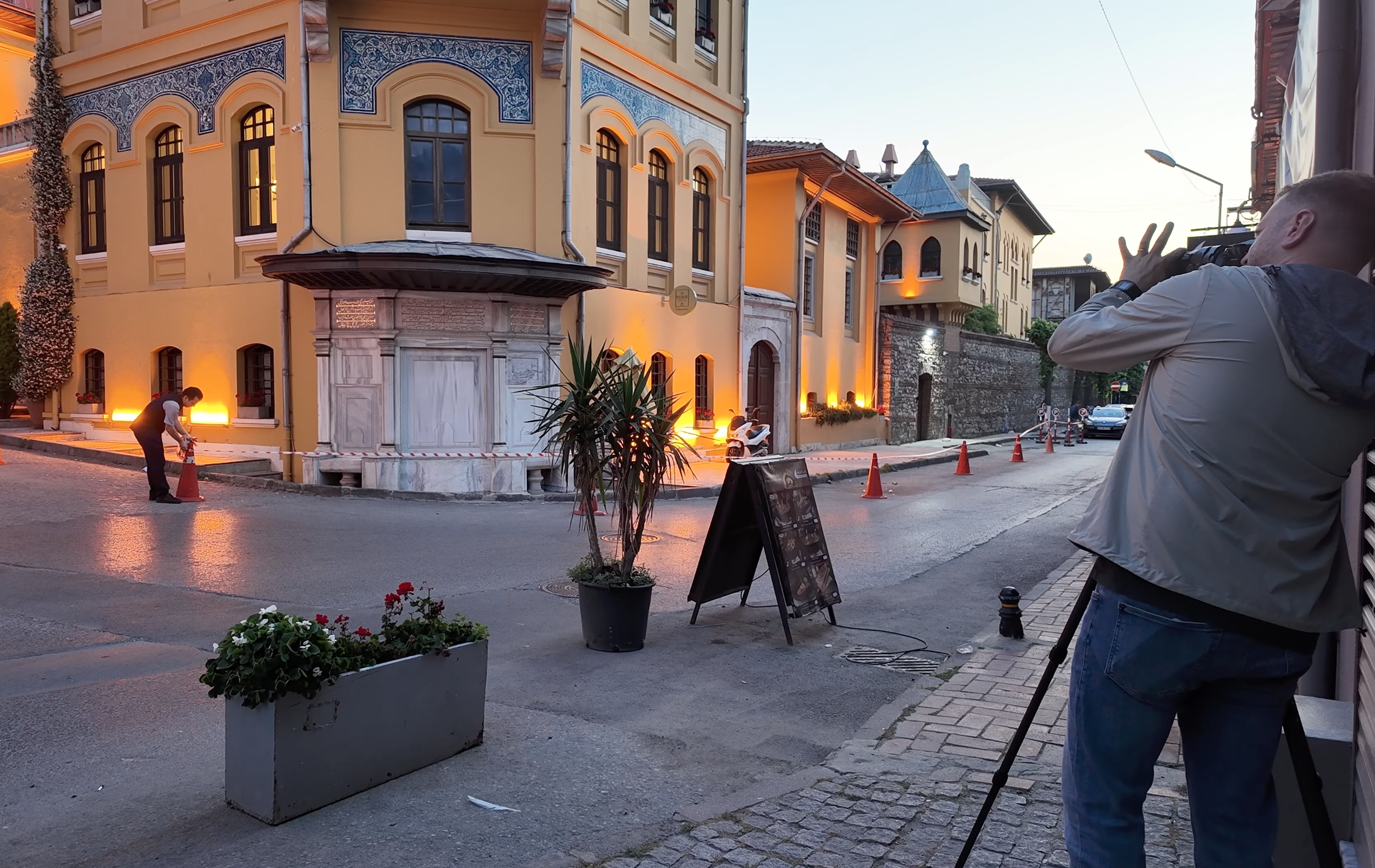
Final image from Four Seasons Hotel Istanbul at the Sultanahmet. This is a public street where usually people park their cars overnight and has many items like big flower pots and canopy etc. This image took a lot of coordination and preparation by hotel team so we could get a clean shot in the morning in a empty street.
During the shoot
Have a single point of contact on site at all times. This is non-negotiable. Ideally the marketing manager or brand manager — someone who understands the brand, can make real-time decisions about styling and staging, and has the authority to coordinate with other departments when something needs to change. The photographer shouldn't be chasing down housekeeping or calling engineering themselves. That's time taken away from creating images.
Trust the photographer's staging instincts — and collaborate. A good hotel photographer will want to move things. Furniture, décor, accessories, sometimes significant pieces. This is normal and necessary. The camera sees differently than the human eye, and what works for the room's daily function doesn't always work for the composition. If the interior designer is available, even better — some of my strongest shoots have been collaborative sessions where the designer and I worked together, finding the balance between design intent and photographic composition.
Respect the light schedule. Your photographer will likely plan exterior and atmospheric shots around golden hour and blue hour — the first and last forty minutes of sunlight. These windows are non-negotiable and non-flexible. If the exterior is scheduled for sunset, everything needs to be ready before that window opens. There's no "can we do it tomorrow instead" when the light is right and the production schedule depends on it.
What most hotels forget
After doing this for years on both sides, these are the things that consistently get missed — and consistently cost quality.
The windows. Dirty windows are invisible from inside the room. In a photograph — especially when shooting toward natural light — they're a disaster. Clean every window in every space being photographed. Inside and outside if accessible. This is the single most commonly overlooked prep item I encounter.
The ceiling. Nobody looks up in a hotel room. The camera sometimes does. Stained ceiling tiles, off-colour replacement panels, discoloured air vents, cobwebs in corners — all of these show up in wide-angle architectural shots. Check from the camera's perspective, not the guest's.
Electrical outlets and switches. Crooked light switch plates. Power outlets with visible scuff marks. Extension cords trailing across floors. Charger cables dangling from bedside tables. All of these create visual noise that the camera picks up and the retoucher then has to spend time removing — if they can be removed at all. Address them before the shoot, not after.
Scent diffusers and small appliances. Hotels often have scent machines, air purifiers, coffee makers, and mini bar equipment in visible positions. Decide before the shoot which ones stay and which ones get removed or repositioned. These are the kind of items that seem fine in person but create clutter in a frame.
The exterior at night. If twilight shots are planned, check that all exterior lighting is working and that the lighting scheme creates the right mood. Walk the exterior after dark before the shoot day. Identify any lights that need replacing, any signage that's not illuminated, and any areas where the lighting is uneven or unflattering.
The investment that protects the investment
A professional photo shoot is a significant investment — in the photographer's time, in the production coordination, and in the revenue impact of the images that result from it. Preparation is what protects that investment. Every hour spent on prep before the shoot saves multiple hours during it and dramatically improves the quality of the output.
I've seen properties where the preparation was so thorough that we spent the entire production time creating images rather than solving problems. And I've seen properties where we lost half the first day to issues that could have been addressed the week before. The photography is the same in both cases. The results are not.
The shoot is the visible part. The preparation is the invisible part that determines whether the visible part produces something you're proud of for years — or something you start replacing within months.
This article is part of The Complete Guide to Luxury Hotel Photography.